
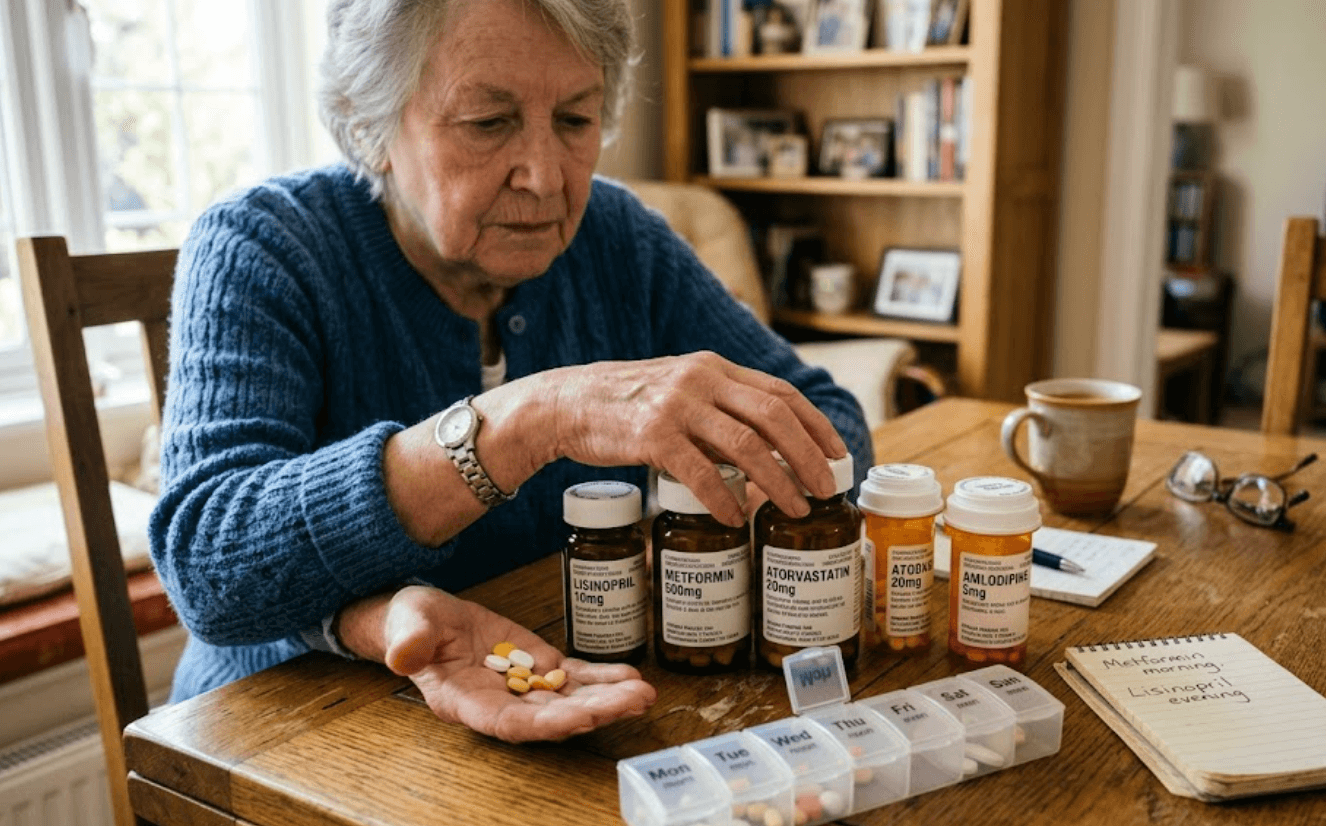
You have likely used a drug interactions checker before.
You type in your list of medications, click “check,” and wait for the results. But when a yellow or red warning flashes on the screen, you are often left with more questions than answers.
Does this alert apply to your specific dose? Is it safe to take these together if you space them out by a few hours?
A digital tool is a helpful starting point, but it cannot replace the expertise of a clinical professional. While these checkers are excellent at identifying known combinations that might cause a reaction, they lack the context of your specific health history and the current OTC supplements you are taking.
To navigate your treatment plan safely, you need to understand how these “collisions” happen and why a professional drug utilization review is the real key to your peace of mind.
How Drug Interactions Actually Work
Drug interactions are not random events; they follow predictable biological patterns. When your body processes chemicals, different medications often compete for the same resources.
The Metabolic Pathway
Your liver metabolizes most medications through a specific group of enzymes. If you take two different drugs that both require the same enzyme for breakdown, your body can struggle to keep up.
- In some cases, one drug causes these enzymes to work too quickly, breaking down your second medication before it has a chance to help you.
- In other cases, a drug might slow the process down, causing your other medication to build up to potentially toxic levels in your bloodstream.
This is why certain foods, like grapefruit, carry warnings. They can inhibit specific enzymes, leading to dangerously high levels of blood pressure or cholesterol medication in your system.
Interference with Absorption
Some interactions happen in the digestive tract before the medicine even reaches your bloodstream. Certain medications or common supplements can “bind” to other substances, preventing them from being properly absorbed.
For example, taking a calcium supplement at the same time as certain antibiotics can trap the antibiotic in the stomach. You might believe you are treating an infection, but your body is only receiving a fraction of the necessary dose.
The Stacking Effect
When two drugs produce similar effects, they can “stack” in ways that are difficult to manage.
If you take two different medications that both lower blood pressure, they might drop your levels too far, leading to dizziness or falls.
This is a common risk for those who see multiple specialists who may not be fully aware of every prescription in the patient’s regimen.
The Limits of a Drug Interactions Checker
Online tools are useful for quick references, but they have distinct limits that every patient should keep in mind.
They flag possibilities, not clinical reality.
A checker looks at the general population data. It might tell you that “Drug A and Drug B have a moderate interaction,” but it does not know your kidney function, your age, or your specific dosage.
A “moderate” warning for a healthy 30-year-old could be a critical risk for a 70-year-old with a different health history.
They rely entirely on your input.
The tool is only as effective as the list you provide. If you forget to mention the antihistamine you take for seasonal allergies or a herbal supplement you take for sleep, the checker has a significant blind spot.
According to the CDC, adverse drug events (ADEs) cause nearly 1.3 million emergency department visits each year in the United States. Many of these stem from interactions involving medications the patient did not think to disclose.
They cannot provide a solution.
When a tool flags an interaction, it does not tell you how to resolve it safely.
It cannot contact your doctor to suggest a different medication, and it should not be used as a reason to skip a dose on your own. It identifies a potential problem but leaves the clinical resolution entirely up to you.
Why a Drug Utilization Review (DUR) is Your Real Safety Net
A drug utilization review is what happens when automated checking meets human expertise. It is a structured, clinical process that occurs before your medication is ever dispensed.
The Dual-Layer Defense
At HealthyWayRx, our process involves a dual-layer system to protect your health:
- Custom Software Screening: Our technology performs an initial check for interactions, allergies, and contraindications against your complete medical profile.
- Clinical Oversight: A physician licensed in the dispensing country reviews the results and your medical history. This human element is vital because it accounts for nuances, such as age-related metabolism or existing conditions, that software alone might miss.
What the Review Specifically Covers
A professional drug utilization review evaluates:
- Therapeutic Duplication: Are you accidentally taking two drugs that perform the same function?
- Drug-Disease Interactions: Is this medication safe given your specific health history, such as heart or kidney issues?
- Dosage Appropriateness: Is the prescribed amount correct for your weight, age, and organ function?
How to Verify a Safe Online Pharmacy
When you choose to use an online service, the “visual cues” of a local pharmacy, the professional setting and face-to-face interaction are not available. Knowing how to verify an online pharmacy is a critical part of your safety protocol.
A safe online pharmacy is more than just a website that ships packages; it is a clinical partner. To ensure you are protected, look for these specific hallmarks:
- Requirement of a Valid Prescription: Avoid any site that offers to sell you “prescription” meds based only on a questionnaire or no script at all.
- Access to Clinical Professionals: You should be able to contact a licensed pharmacist or us to ask questions about your treatment.
- Transparent Licensing: Ensure the provider uses a licensed international network of pharmacies. For example, Canadian pharmacies should be registered with their provincial College of Pharmacists, and UK pharmacies must be registered with the General Pharmaceutical Council (GPhC).
- Physical Presence: A legitimate pharmacy will provide a physical address and a way to verify its license through official government or regulatory boards.
Supporting Your Own Medication Safety
Safety is a partnership between you and your healthcare providers. You can make the review process much more effective by following a few simple steps:
- Maintain a Master List: Keep a current list of every prescription, over-the-counter drug, and supplement you take.
- Be Thorough With Your Profile: When filling out your profile for an order, include all past allergies and health conditions.
- Use One Pharmacy Provider: When possible, fill all your maintenance medications through the same source. This allows the provider to have a “bird’s-eye view” of your entire regimen, making it easier to spot duplicates or interactions.
- Ask About Interactions Proactively: If a drug interactions checker gives you a warning, do not panic. Bring that information to your doctor or our clinical team to get a professional perspective on whether it truly affects your specific dose.
Clear Answers About Safety Reviews
1. Can I trust a “no interactions found” result from an online checker?
This result indicates that there are no known major interactions between the drugs you entered. However, it does not account for your specific health conditions, your age, or any medications you may have forgotten to list. Always treat the digital result as a helpful sign, not a final guarantee of safety.
2. What if I am seeing two different doctors?
This is a high-risk scenario for interactions. If your cardiologist prescribes one medication and your primary care doctor prescribes another, they may not realize the two drugs conflict. Always ensure that both doctors have your complete list and that you rely on your pharmacy’s drug utilization review as the final safety checkpoint.
3. Are all drug interactions dangerous?
Not all. Many interactions are “moderate” or “minor,” meaning they might cause slight side effects or a small change in how well a drug works. A pharmacist or doctor can often manage these by simply adjusting the time of day you take each pill. The goal of a review is to identify which interactions require action and which are manageable.
4. How do I know if the international meds are safe?
Medications sourced through a licensed international network must meet the rigorous safety and manufacturing standards of their respective countries (like Health Canada or the UK’s MHRA). These standards are comparable to those of the U.S. FDA, ensuring that the medication you receive is high-quality and verified.
Safety Built into Every Order
Taking multiple medications should not feel like a gamble. While managing chronic conditions is often necessary for your health, it shouldn’t be a constant source of worry about potential reactions.
At HealthyWayRx, we provide more than just a delivery service. We provide a rigorous safety infrastructure. From our custom drug utilization review software to the oversight of licensed physicians in our international network, we ensure that your medications work together to support your health.
When you are ready to experience a simpler, safer way to manage your prescriptions, we are ready to assist.
You can get started with your order today or explore our services to see how we prioritize both your savings and your safety. You focus on feeling your best; we will focus on the details of your care.
A quick note about your health: We are dedicated to providing you with safe, affordable access to your prescription medications. However, the information on this website is for educational purposes and should not replace professional medical advice. Always consult with your physician or healthcare professional before taking any new prescription or over-the-counter medication. If you are experiencing a medical emergency, please call 911 immediately.